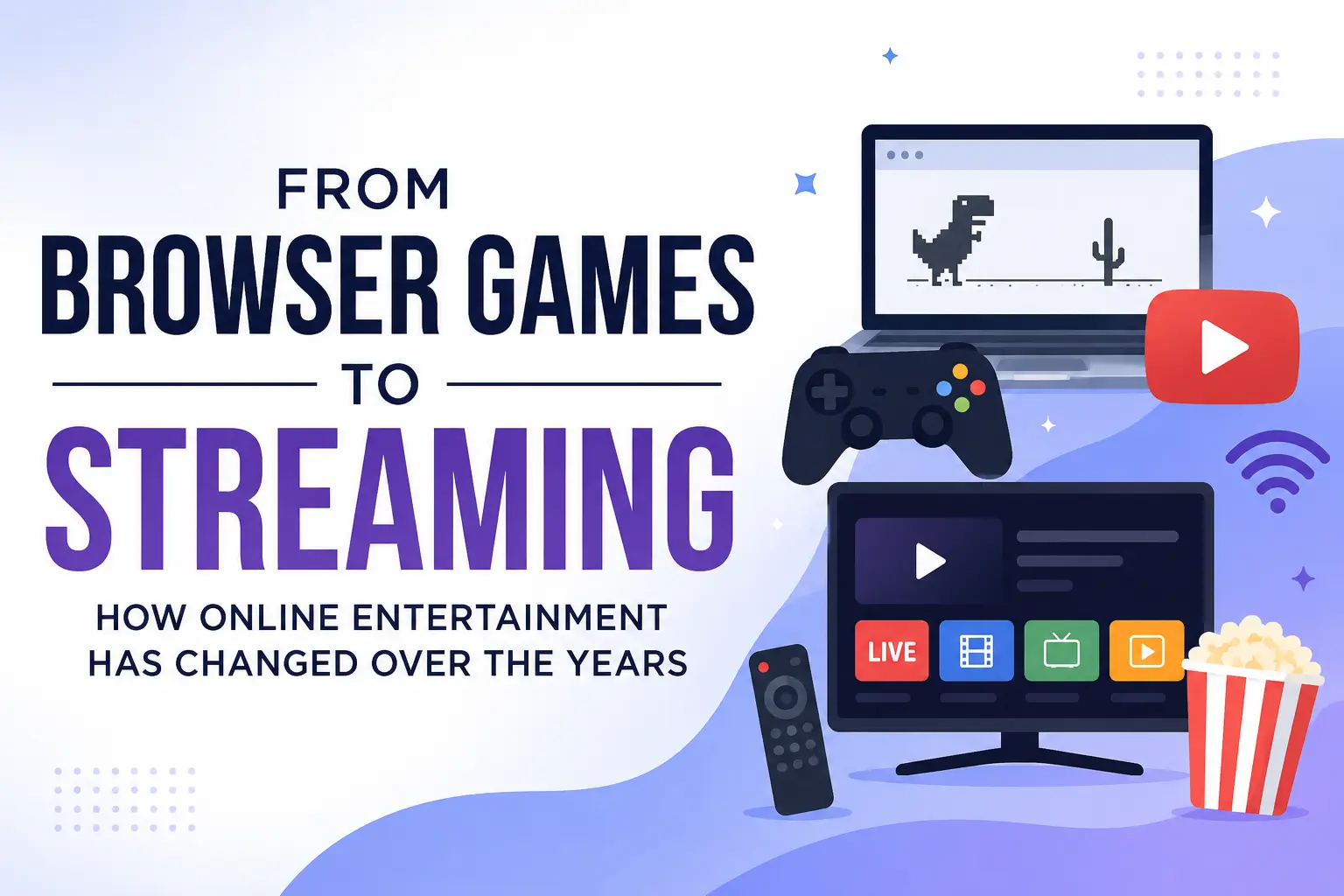
From Browser Games to Streaming: How Online Entertainment Has Changed Over the Years
The internet has transformed the way people enjoy entertainment. Years ago, online entertainment mainly consisted of simple browser games, fun websites, and interactive experiences. Today, users have access to a wide variety of digital content, including videos, live streams, movies, television channels, and online gaming platforms.
As technology continues to improve, online entertainment has become more accessible, convenient, and diverse than ever before. This article explores how digital entertainment has evolved from simple browser-based experiences to modern streaming services.
The Early Days of Online Entertainment
In the early years of the internet, entertainment was often simple and lightweight. Users visited websites that offered mini-games, puzzles, quizzes, and fun interactive experiences.
One popular example is the famous “Do a Barrel Roll” effect, which became an internet sensation after Google introduced it as an Easter egg. Users enjoyed discovering hidden features and sharing them with friends, creating memorable online experiences.
These early forms of entertainment showed how the internet could be more than just a source of information—it could also be a place for fun and creativity.
The Rise of Browser-Based Experiences
As internet speeds improved, developers began creating more advanced browser-based content. Flash games, interactive websites, animations, and multimedia experiences became increasingly popular.
People no longer needed to download software to enjoy online entertainment. Everything could be accessed directly through a web browser. This convenience attracted millions of users and helped shape the future of digital entertainment.
Browser experiences also encouraged social sharing, helping content spread quickly across online communities.
Video Platforms Changed Everything
The launch and growth of video-sharing platforms completely transformed how people consume content online. Instead of reading text-based content alone, users could watch tutorials, entertainment videos, documentaries, gaming content, and educational material.
Video platforms gave creators the opportunity to reach global audiences and allowed viewers to access content whenever they wanted. This shift played a major role in the development of modern streaming culture.
Today, video content remains one of the most popular forms of online entertainment worldwide.
Streaming Services and On-Demand Entertainment
Streaming technology introduced a new level of convenience. Instead of waiting for scheduled broadcasts, users could watch movies, television shows, and live content whenever they wanted.
Streaming services became popular because they offered:
- Easy access to content
- Viewing on multiple devices
- Large content libraries
- Personalized recommendations
- Flexible subscription options
This new approach to entertainment gave users greater control over what they watch and when they watch it.
The Growing Popularity of IPTV Services
Another development in digital entertainment is Internet Protocol Television (IPTV). IPTV delivers television content through internet connections rather than traditional cable or satellite systems.
Many users appreciate IPTV services because they can access a wide range of channels and entertainment content from different regions.
One example is EVDTV IPTV, which provides channel subscriptions and entertainment options designed for viewers seeking internet-based television access. Services like these reflect the growing demand for flexible entertainment solutions that can be accessed across multiple devices.
As internet infrastructure continues to improve around the world, IPTV platforms are expected to play an increasingly important role in digital media consumption.
Entertainment Across Multiple Devices
Modern users expect entertainment to be available wherever they go. Smartphones, tablets, laptops, smart televisions, and other connected devices have made it possible to enjoy content almost anywhere.
This flexibility has changed viewing habits and made entertainment more convenient for people with busy lifestyles.
Whether someone is watching videos, exploring interactive websites, playing browser games, or streaming live television, today’s technology provides countless options.
The Future of Online Entertainment
The future of online entertainment will likely include even more personalized experiences, faster streaming technologies, improved content discovery, and greater accessibility.
Artificial intelligence, cloud computing, and enhanced internet connectivity are expected to continue shaping how people consume digital content.
As new technologies emerge, online entertainment will become more immersive and interactive than ever before.
Conclusion
Online entertainment has come a long way from simple browser tricks and interactive websites. What began as basic online experiences has evolved into a massive ecosystem of streaming platforms, video services, and internet-based television solutions.
As technology continues to advance, users can expect even greater convenience, flexibility, and variety in the way they access and enjoy digital entertainment.